Many accounting and bookkeeping firms begin with a collection of tools and processes.
Email, spreadsheets, shared drives, paper files, handwritten notes and Companies House reminders all play a part in helping firms keep on top of client work.
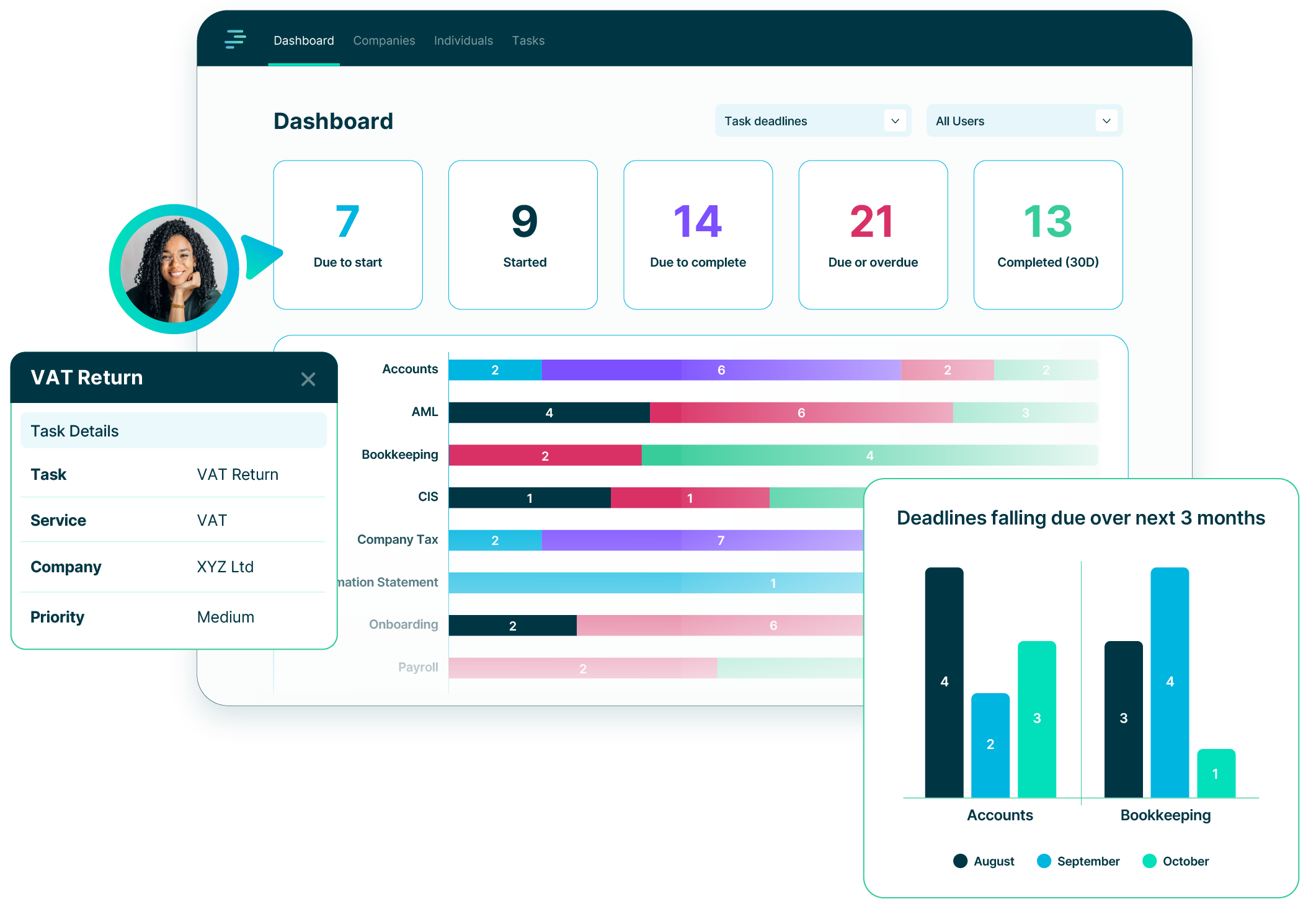
As firms grow, many then introduce practice management software to organise tasks, deadlines and workflow. Work becomes more visible, responsibilities become clearer and recurring jobs become easier to manage.
The next challenge is often how information is collected from clients, organised and linked back to the work being performed.
This is often the point at which firms begin looking at client portals.
The issue is rarely that information has disappeared.
More often, it exists somewhere within the firm’s systems, emails or records. The challenge is the time wasted finding it, checking whether everything has been received and bringing it together to support the work being completed.
A client may send records by email, answer a query over the phone and provide additional information separately at a later date. None of these things are necessarily problematic in isolation.
As practices grow, however, the volume of information increases. More clients generate more communication.
More communication generates more disparate information. More people become involved in requesting, receiving and organising that information.
The issue is the cumulative time spent locating information, organising it and determining whether everything needed to complete the job has been received.
For firms that are already time poor, these small delays can quickly add up across hundreds of clients and recurring jobs.
Many firms operate successfully using email-heavy processes.
Email remains one of the most widely used communication tools in business. Firms have been using it for more than thirty years. What once represented a major improvement over letters, faxes and paper records is now often being used to manage increasingly complex workflows and growing volumes of information.
Email may still be excellent for general communication with clients, but is it the best place to manage the information needed to complete recurring work?
As firms grow, this question becomes increasingly important.
Many firms reach a point where they want a more structured way of requesting information, tracking responses and organising documents without relying entirely on individual inboxes and manual follow-up processes.
For many firms, practice management software is the first step.
Tasks become visible. Deadlines become easier to manage. Workflow becomes more structured.
The next challenge is often how information moves between the firm and its clients.
Documents need to be collected. Forms need to be completed. Approvals need to be obtained. Engagement letters need to be signed. Outstanding requests need to be tracked. This is often the point where firms start looking at client portals.
A client portal can provide a more structured process for collecting information while helping firms keep requests, responses and supporting documents organised. For many growing firms, it is simply a more efficient way to manage client communication and information.
At its simplest, a client portal provides a secure place for firms and clients to exchange documents, access information and complete tasks such as electronic signatures.
Many firms initially see portals as a document storage solution, and that is certainly part of their value. Clients can access historic documents when needed, while firms have a more secure and organised alternative to email attachments.
However, the biggest benefits often emerge when the portal becomes part of the firm’s day-to-day workflow.
A good client portal can help firms:
The goal is not necessarily to replace email. Instead, it is to provide a more structured process for the interactions that support recurring work.
Whether that work relates to accounts, VAT, payroll, AML, bookkeeping or engagement letters, the underlying challenge is often the same.
Firms need a reliable way to request information, receive responses, obtain approvals and keep everything organised in one place.
Most accountants and bookkeepers are already familiar with client portals in one form or another.
When designing the PracticeFlow Client Portal, we started with a different question:
> If we were designing a portal specifically for accounting and bookkeeping firms today, how should it work?
Rather than starting with the portal itself, we decided to start with the work being performed.
PracticeFlow starts with the task being performed. The focus is on helping firms collect the information needed to move that task forward.
A member of staff working on a VAT return, payroll run, accounts job or AML review can create a request directly from that task.
Requests can take the form of:
The client receives a link directly to the specific request that requires action.
Rather than asking clients to navigate through a portal structure, the focus is on helping them complete the task in front of them as quickly and simply as possible.
Importantly, the request remains connected to the underlying work being performed.
A client portal is only useful if clients actually use it.
Most clients do not want to learn a complicated system. They simply want to know what information is required and what they need to do next.
That is why we deliberately focused on keeping the process simple, intuitive and easy to access.
Clients can access a specific request directly, complete the required action and move on.
The aim is not to create additional administration. It is to reduce operational friction for both firms and their clients.
At the same time, firms benefit from having requests, responses and supporting information linked back to the relevant work inside PracticeFlow.
Not every firm needs a client portal immediately.
Many firms continue to operate successfully using email and spreadsheets, particularly when teams are small and processes are well established.
However, as firms grow, the challenge of collecting, organising and managing client information often becomes more significant.
For many firms, practice management software is the first step towards greater operational control.
A client portal helps bring the same structure to client interactions.
The PracticeFlow Client Portal was released in May 2026 and is available on Professional and Enterprise plans.
If you’re looking for a more structured way to collect information, manage client requests and keep everything connected to the underlying work, we’d be happy to show you how it works.
Join the growing number of UK accounting and bookkeeping practices using PracticeFlow to stay organised, meet deadlines, and focus on what matters most.